If I had to pick one Lean Construction practice that’s transformed our project delivery the most, it would be pull planning. When we first introduced this approach at Skiles Group, I’ll admit there was skepticism among some team members and trade partners. Yet over time, pull planning has become a cornerstone of our project management process—and for good reason. It fosters teamwork, improves schedule reliability, and helps us deliver real value, not just fast finishes.
What Is Pull Planning and Why Does It Matter?
Pull planning flips traditional project scheduling on its head. Rather than a top-down directive about how work “should” flow, we work backwards from major milestones and pull activities into place, week by week, based on the input of those who’ll do the work. The people installing the ductwork, running conduit, or framing walls—each has a voice. By engaging everyone early, we build a realistic plan grounded in field realities.
Why does it matter? In my experience, this collaborative approach reduces assumptions and “gotchas” because the folks who know the job best are helping build the plan. More than that, it’s a trust exercise. When teams share responsibility for success, the plan isn’t just a chart in a trailer—it’s a shared promise.
How Pull Planning Creates Accountability and Flow
With traditional schedules, it’s easy for disconnects to sneak in. One trade falls behind and everyone else suffers the delays. Pull planning creates a flow of commitments: every handoff, every interface between trades is discussed, sequenced, and agreed upon. Instead of pointing fingers, the team comes together every week to review what’s completed, what’s next, and what blockers need to be tackled.
Over time, this creates a culture of accountability built on respect. Teams no longer wait for someone to direct them—they know what comes next, who depends on them, and how their efforts contribute to the whole. This approach builds trust, and trust leads to stronger outcomes.
Making Pull Planning Work for Your Team
From firsthand experience, success with pull planning relies on a few critical steps:
- Preparation: Don’t walk into the room with a fully mapped-out plan. Instead, outline milestones and constraints, then invite input from everyone.
- Facilitation: A neutral facilitator, who understands Lean concepts and group dynamics, is key to keeping dialogue open, focusing on the big picture, and prompting quieter team members to speak up.
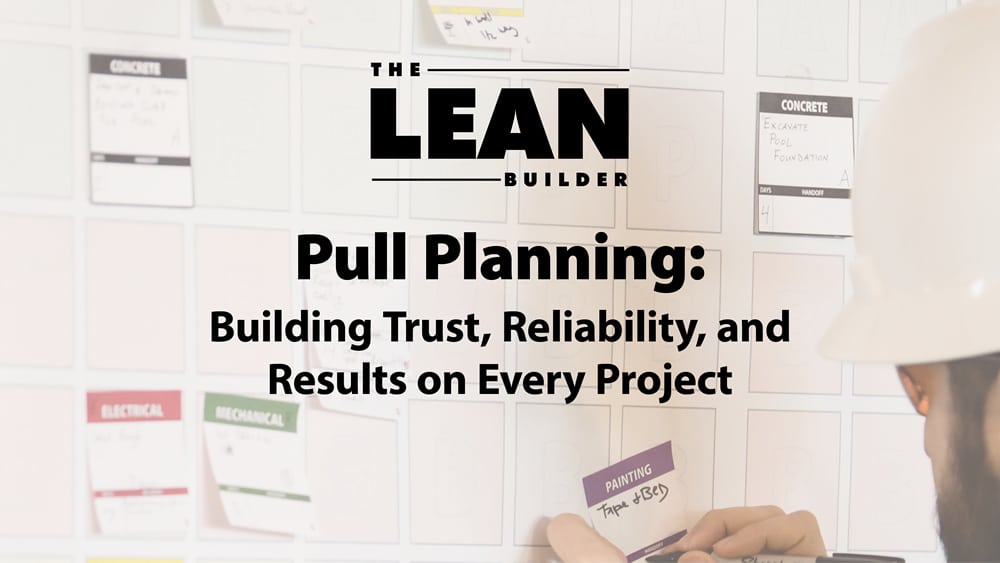
- The Right Tools: We use sticky notes, whiteboards, and digital solutions to visualize upcoming work. The most important ingredient is visibility—everyone can see the plan evolve in real time.
- Follow-Up: After the initial session, we conduct weekly and daily check-ins. This keeps everyone aligned and fosters improvements as issues arise.
Real-World Impact: A Healthcare Project Story
On a recent healthcare project, conflicting MEP work threatened to derail our schedule. By gathering the trade leads in a pull planning session, we mapped out the sequence together. Walls that would have been framed early—and then demoed for rework—were instead installed in the right order, with clear dates for each activity. What could’ve been a series of costly delays turned into a schedule we all owned—and ultimately beat.
Dealing with Resistance and Setbacks
It’s natural for teams new to pull planning to worry that it’s “just another meeting” or to resist changing long-standing habits. The key is to focus on quick wins: when the team sees a problem avoided or a milestone hit ahead of schedule, buy-in grows. When mistakes happen (they will), treat them as learning opportunities rather than failures.
Building a Continuous Improvement Mindset
Perhaps the greatest benefit of pull planning is the culture it creates. By empowering everyone to contribute and aligning trade partners around shared goals, we foster a spirit of openness and continuous improvement. That’s how Lean thinking grows—one project, one team, and one conversation at a time.
Pull planning is more than just a scheduling exercise. It’s about building trust, empowering teams, and delivering consistent value to our clients and communities. Once you experience the results—a project that feels coordinated, an atmosphere of respect, and a sense of collective pride—it’s hard to go back. That’s why pull planning will remain central to how we deliver at Skiles Group.
Be sure and follow Keyan Zandy on LinkedIn!
Related Blogs
Keyan Zandy, Skiles Group

Keyan is a longtime Lean enthusiast and advocate with a curiosity for how Lean processes and tools can improve teambuilding and teamwork in construction. As Skiles Group’s CEO, Keyan is responsible for driving corporate growth and guiding the company’s strategic direction while maintaining a dual focus on client service and nurturing a progressive company culture. With an emphasis on technological advancement, continuous improvement, and innovation in construction, Keyan shepherds the firm’s commitment to improving project delivery processes via Lean Construction and Lean project planning initiatives. He is the co-author of The Lean Builder: A Builder’s Guide to Applying Lean Tools in the Field, which simplifies and clearly articulates the benefits of seven primary Lean concepts, and delivers them in a highly-relatable, immediately-applicable, and field-friendly manner. Keyan also serves as Chairman for Smart Safety, an award-winning crisis management communication and emergency response tool.